
How Machinery Movers Handle High-Value Precision Equipment
Key Takeaways
- High-value, high-precision machinery requires controlled dismantling, calibrated handling, and documented reinstallation—not standard lifting.
- Machinery movers focus on risk assessment, load distribution, vibration control, and alignment accuracy.
- General moving services in Singapore are unsuitable for precision equipment without specialised tooling and engineering oversight.
- Downtime prevention and post-move performance validation are as critical as the physical move itself.
Moving high-value, high-precision machinery is not a logistics exercise; it is a technical operation with direct implications for safety, calibration accuracy, and operational continuity. Equipment such as CNC machines, semiconductor tools, medical imaging systems, and laboratory instruments cannot tolerate shock, vibration, or misalignment. This instance is where specialised machinery movers differ fundamentally from standard moving services in Singapore. The process is governed by engineering controls, not convenience.
Pre-Move Risk Assessment and Method Planning
The first step machinery movers take is a structured site and equipment assessment. This approach includes reviewing equipment specifications, centre of gravity, load points, tolerances, anchoring methods, and manufacturer handling requirements. Floor loading capacity, access routes, ceiling height, lift limits, turning radii, and environmental conditions are evaluated before any physical work begins. A detailed method statement is then developed, outlining lifting sequences, rigging configurations, equipment protection measures, and contingency plans. This level of planning is absent in conventional moving services, which typically focus on volume and speed rather than precision.
Controlled Dismantling and Component Protection
High-precision equipment is rarely moved as a single unit. Machinery movers dismantle critical components where required, following manufacturer guidelines to prevent structural stress or calibration drift. Sensitive parts such as spindles, sensors, optics, and control modules are isolated, labelled, and packed using anti-static materials, shock-absorbing crates, and moisture control systems. Fasteners, mounts, and alignment markers are documented to ensure accurate reassembly. This approach reduces mechanical strain and protects internal tolerances during transit.
Specialised Lifting, Rigging, and Load Distribution
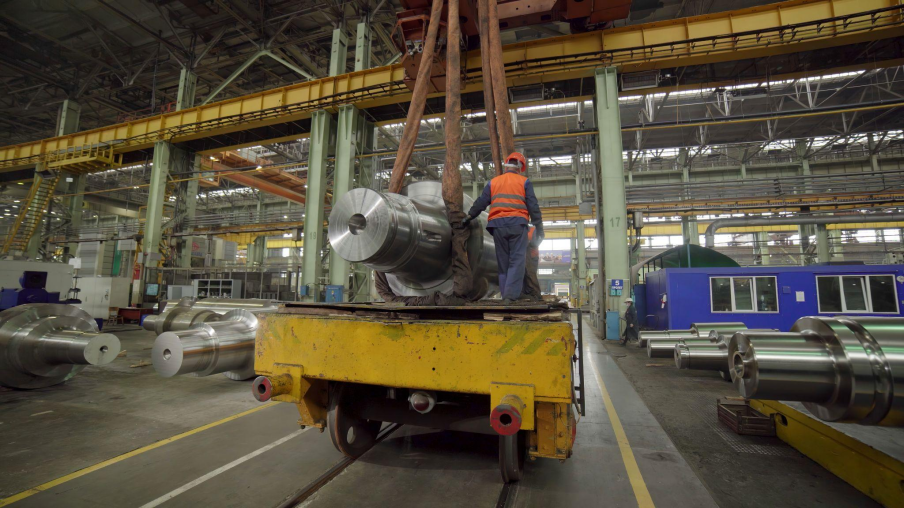
Precision machinery cannot be lifted using generic slings or forklifts. Machinery movers use calibrated lifting frames, spreader beams, air skates, gantries, and hydraulic jacks to control load distribution. The objective is to eliminate point loading, torsion, and sudden movement. Each lift is executed slowly and deliberately, with constant monitoring of balance and clearance. This approach contrasts sharply with general moving services, where lifting equipment is designed for furniture and pallets rather than multi-tonne, tolerance-sensitive assets.
Vibration and Shock Control During Transport
Transport is one of the highest-risk phases for high-value machinery. Machinery movers mitigate this risk through vibration-dampening platforms, air-ride vehicles, and controlled securing systems. Shock sensors and tilt indicators are often installed to monitor movement during transit. Routes are planned to avoid uneven surfaces, tight turns, and sudden elevation changes. Speed limits are enforced to reduce dynamic loads, ensuring that internal components remain within acceptable stress thresholds.
Precision Positioning, Alignment, and Reinstallation
Arrival at the destination is not the end of the job. Machinery movers position equipment using laser alignment tools, levelling systems, and calibrated reference points. Even minor misalignment can affect accuracy, wear rates, and output quality. Once positioned, anchoring is completed according to engineering specifications, not visual estimation. Power reconnection, environmental stabilisation, and clearance verification are handled methodically to prepare the equipment for recommissioning.
Post-Move Verification and Documentation
Professional machinery movers in Singapore conduct post-move checks to confirm structural integrity, alignment accuracy, and installation compliance. Documentation is provided to support audits, insurance, and warranty requirements. Third-party calibration or vendor validation, in some cases, is coordinated before production resumes. This step is critical in preventing latent defects that may only surface weeks after relocation.
Conclusion
Managing high-value, high-precision equipment requires technical competence, specialised tools, and disciplined execution. Machinery movers in Singapore operate at the intersection of engineering, safety, and operations continuity—far beyond what standard moving services are designed to deliver. The real value for businesses lies not in moving equipment from point A to point B, but in ensuring that it performs exactly as intended the moment it is switched back on.
Contact Aspect Mover and let us help relocate high-value or precision machinery without risking downtime or damage.